Boswell Sisters — Career Timeline
From Martha's birth in 1905 through the trio's final broadcast in 1936 — and the family milestones that followed.
They (the Boswell Sisters) changed popular music from the 1930s forward.
-
July 9, 1905
Martha Boswell is born near Kansas City, the second child of AC and Meldania Foore Boswell. (A son, Clyde Jr., had been born in 1900.) Martha is a name passed down through her mother’s family and is shared by an aunt who is better known as “Mattie”. Mattie marries AC’s brother Charles and a tight family bond is formed.
-
December 3, 1907
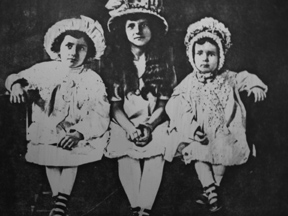
Constance F. Boswell comes kicking and screaming into the world. She would lose the kick at age 3 when polio left her with partially paralyzed legs. But the scream eventually mellowed into one of the biggest voices of the century.
-
May 20, 1911
Helvetia George Boswell made her presence known to the world in Birmingham, Alabama. Where did they get that name? According to Vet (the name she was best known by) it came off a can of condensed milk. Connie’s paralysis kept Meldania too busy to nurse the newborn. So the name on the milk can became hers. Don’t ask us where the George comes from.

-
1914
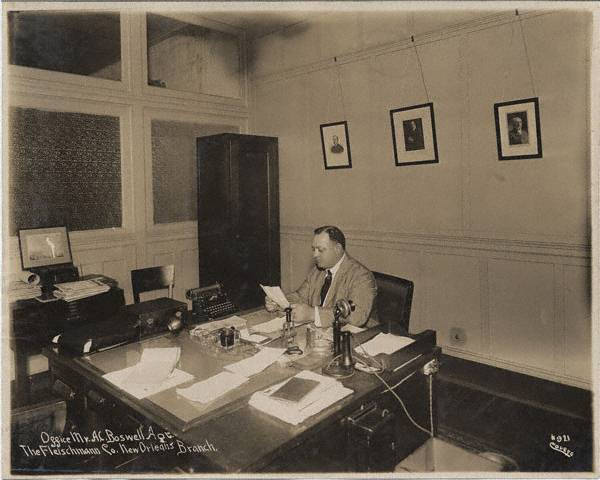
The Boswell family leaves Birmingham and settles in New Orleans where AC becomes the agent for the Fleischmann Yeast Company.
-
1916
The Boswell family moves into the house at 3937 Camp Street which the sisters will call home for the next 20 years.
-
October 22, 1918
Just weeks after joining the Army, 18-year old Alfred Clyde Boswell Jr. is tragically stricken with influenza and dies in a medical camp on the outskirts of New Orleans. “Clydie” had played the violin and worked as an automobile mechanic before going to serve his country.
-
May 17, 1919
the Boswell Sisters make their first public appearance together at the French Opera House in “Veronica’s Veil”. They performed as a string trio of angels.
-
May 6, 1922
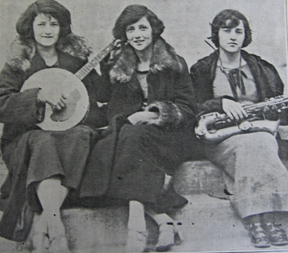
Martha and Connie win a talent contest on radio station WAAB in New Orleans. This leads to their first professional engagement – a three-day booking at the Palace Theatre where they earned $25 apiece.
-
March 22-25, 1925
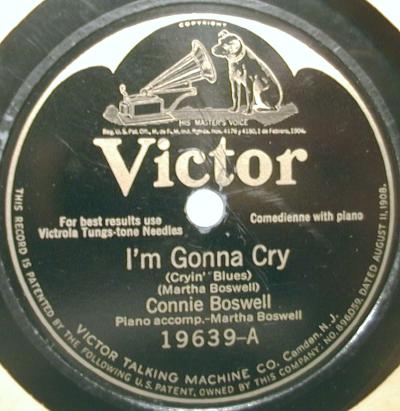
The Boswell Sisters make their first recording on the Victor label. Of the five songs they record, two are chosen for release: Nights When I Am Lonely and Cryin’ Blues. All three sisters perform on both songs which were written by Martha. Elements that were to distinguish the “Boswell Sound” are evident on this record. Seventeen-year-old Connie sings like the last of the red hot mammas on Cryin’ while Martha plays piano and Vet joins her in an “instrumental” bridge (the instruments they are trying to imitate are a little hard to discern and border on the squeak and gargle numbers of vaudeville). The Sisters sing harmony on Nights with Vet joining Connie and Martha on the chorus. They sing “gibberish” on the chorus, a kind of code talk, that they would continue to use with fascinating results throughout their career.
-
August 30 – September 4, 1925
The Boswell’s big break. An act cancels at the Orpheum Theater, New Orleans’ top vaudeville venue and the Boswell Sisters get a chance to perform. They bring down the house and close down the schools (literally – they let classes out at the school the Sisters were attending so the students could watch their show). The Sisters performed on their instruments (Martha on piano, Connie on saxophone and Vet on banjo) as well as singing. It was a turning point in their career.
-
October 8, 1925
Despite continued success on radio and stage, Martha Boswell elopes with Jules Picard. The marriage and subsequent birth of a son in August of 1926 slows but does not stop the professional life of the sisters. Martha and Jules divorce in 1927.
-
November 1927
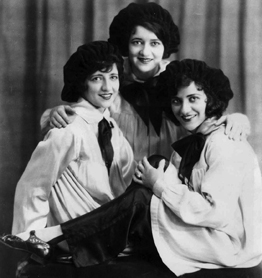
The Sisters are booked in the Orpheum Theater for a return engagement. This time it attracts the attention of the Max Richards Agency who sends a letter in early 1928 inviting the Sisters to bring their act to Chicago. Connie would later recall that it was actually a form letter that was sent to all the acts that performed in the Orpheum chain, inviting them to a “try-out” theater where booking agents would size up the acts. But the girls initially thought it was an invitation to come play a major Chicago theater. Martha’s baby and Connie’s vocal chord surgery in June 1928 cause several delays.
-
September 14, 1928
The Boswell Sisters make their initial tryout at the Englewood Theater. Vet Boswell recalled they were so anxious that when the curtain came up they weren’t able to play their instruments or dance, but did manage to sing. Vet laughingly recounted how the stage manager came up to them after the show to ask “Don’t you girls do anything but sing?”
-
October 23, 1928
The Sisters sign a contract with Western Vaudeville Management Company for a 5-week tour of Arkansas, Oklahoma and Texas for $50 per performance. Vet Boswell recounted their experience of playing to audiences of blanket-wrapped Indians, flagging down trains in the middle of the night and the rigors of playing one-night stands. When she learned that women were not usually sent out on this rough and tumble circuit she asked Max Richards, “Whadda we look like? Three Ducks?”
-
December 7, 1928
During a game of hide-and-seek at an Arkansas City hotel, Connie slips out a window to what she believes to be a porch four feet below. In the dark she fails to see the porch does not come flush with the wall and plunges 18 feet to the basement. Her sisters heard the fall and had Connie rushed to the hospital. Despite a severely bruised shoulder and ankle, Connie “goes on with the show” and continues with her performance the next day. In later interviews, Connie would describe this accident as an event that took away most of the mobility she had. Martha and Vet had to carry her for the rest of their tour.
-
January 1929
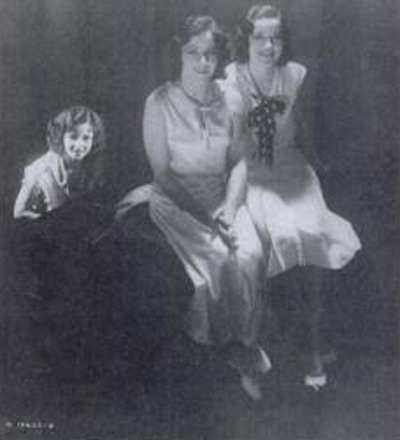
After traveling across the country with fellow vaudeville performers, the Sisters land in San Francisco. They check into the Warfield hotel where desk clerk, Harry Leedy, takes an interest in them. They get booked on the Burt Levy vaudeville circuit and play cities in the bay area.
-
April – June, 1929
The Sisters “Go Hollywood” traveling to Los Angeles with hopes of hitting it big. After months of knocking on doors, eating spaghetti three times a day and nearly giving up they are finally hired by Paramount affiliate radio KNX in June. Their broadcasts lead to jobs in the movies as “side-mikers” whose voices were used in films but faces not seen on screen.
-
January-February 1930
Warner Brothers affiliate KFWB hire the Sisters. Connie remembered when they began working they did a show with Russ Columbo, the Valentinoesque singer and violinist. In the beginning the show also featured a pianist. But when management found out all the things the Sisters could do, Columbo and his compatriot were given their walking papers. The Boswell’s filled a full two hours with a combination of piano solos by Martha, harmony singing, specialty songs, solos by Connie and instrumentals.
-
April 1930
The Continental Broadcast Company recorded music in the mainland to play on radio in Hawaii. The Boswell Sisters make their first recordings since the Victor sessions in New Orleans, many of which are still available. The music is recorded in 15-minute segments, accompanied by Martha on piano. The sound is best described as “early Boswell” with many of the earmarks of harmonics, scat and tempo change firmly established. Connie’s powerful solo voice is well developed but Martha still sings solos on a few numbers. Their incredible blend and hours of rehearsal is most evident on the a cappella rendition of Love Ain’t Nothin’ But the Blues.
-
July 30, 1930
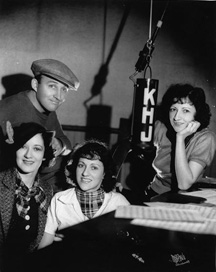
The Sisters are heard from coast-to-coast on the “California Melodies” program, broadcast on the CBS network from KHJ in Los Angeles.
-
October 3, 1930
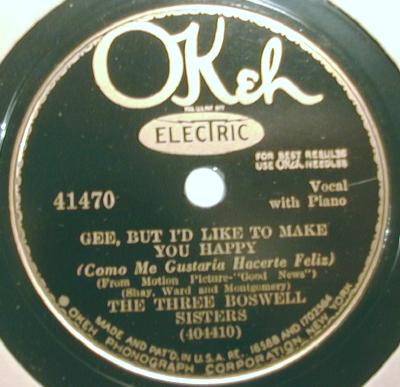
Okeh Records cuts My Future Just Passed, Heebie Jeebies and Gee But I’d Like to Make You Happy with the Sisters singing and Martha on piano. Their pal from San Francisco, Harry Leedy, comes for a visit and becomes their manager. He encourages them to concentrate on singing and give up the banjo and saxophone portion of the act. No recording of their instrumental performances exist. On Halloween of that year they record, Don’t Tell Him (What Happened to Me).
-
November 1930
NBC’s Pacific Coast Network puts the Boswell’s under contract and they return to San Francisco where they broadcast from radio station KGO. They are featured on the “Camel Pleasure Hour” in several network broadcasts. During time a woman from Oakland California writes to KGO complaining that the Boswell Sisters sound like “savage chanters”. Connie and Vet later said that the letter had so upset Martha that she had started to tear it up. But Connie grabbed it from her hands and told her sisters that this was proof that what they were doing was completely different.
-
February 1931
Harry’s sales job in New York pays off. They sign a year-long contract with NBC and move to New York where they begin performing on WJZ. They make a stop in New Orleans in February and do a special broadcast over station WSMB to all the folks back home. They are about to bust loose.
-
March 19, 1931
The Sisters travel to what Connie recalled as “some place in New Jersey”. But records show that it was New York City where the Boswell Sisters made their first hit record: When I Take My Sugar to Tea and Whadya Do to Me. The title of the latter would be what songs would ask the Boswell’s for the next five years as they invent arrangements and create harmonies like no one before them. The Brunswick house orchestra backing them includes the up-and coming Dorsey Brothers. Connie told a reporter this had been the first time they’d met these guys, so they ran through their number and showed them how they wanted to record. When they were through the band gave them a standing ovation, a rare act for a group of house musicians. But they knew better than anyone that something new and wonderful was about to happen to music.
-
April 23, 1931
Roll On Mississippi, Roll On, Shout Sister Shout
-
May 22, 1931
I Surrender Dear, Stardust
-
May 25, 1931
Sing a Little Jingle, I Found a Million Dollar Baby
-
June 21, 1931
Heebie Jeebies is heard and SEEN by one of the earliest commercial television audiences as the Boswell’s make their TV debut on CBS.

-
Summer 1931
Although the dates conflict, sometime during the summer Martha, Connie and Vet make their film debut, cutting a Paramount short called “Close Farm-ony”. Martha accompanies their farm fun on a piano made of hay bales. Connie is unusually mobile in this movie. Although seated for much of it, she demonstrates a range of mobility by straddling then swinging her legs to the side of a hay bale and standing in a brief scene. The short debuts in January 1932.
-
July 8, 1931
The “Boswell Sound” is set and the Sisters’ long association with Victor Young is cemented by the time they record It’s the Girl and It’s You for Brunswick. Victor Young’s orchestra became a favorite of the Sisters. Not only did it include the Dorsey Brothers but by this time Joe Tarto had become the bass/tuba player of choice. Joe Venutti’s playful jazz violin and Eddie Lang’s swinging guitar were also requested for Boswell sessions. The Sisters made their own arrangements (but never wrote the singing parts down) and Connie would write the charts for the orchestra. Much like African American jazz musicians from New Orleans, the Boswell’s encouraged their sidemen to “jam”. Some historians credit the Boswell’s as the first to allow white musicians this kind of creative freedom.
-
July 27, 1931
Connie Boswell – I’m All Dressed Up With a Broken Heart, What Is It
-
August 17, 1931
Makin’ Faces at the Man in the Moon, I Can’t Write the Words
-
August 27, 1931
Shine On, Harvest Moon, Heebie Jeebies
-
October 10, 1931
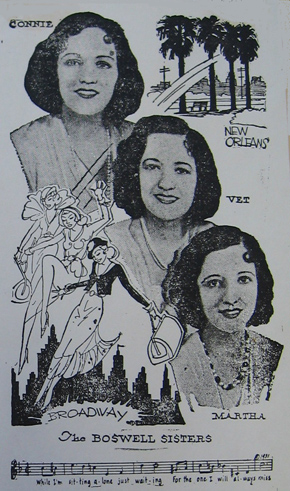
The Boswells crash Broadway in a smashing performance at the Palace. It was the climax to a run in vaudeville houses that began in August 1931. The Sisters continued working closely with Brunswick producer Jack Kapp who will supervise their recordings for the rest of their career. They cut sides with the Kapp’s stable of stars on October 25 titled Gems from George White’s Scandals featuring Bing Crosby, Frank Munn and the Mills Brothers. Connie told a reporter that most of their recordings were made between midnight and dawn. They’d finish up a show at the Paramount or the Roxie, then go to a little bar off Broadway to pick up the Dorsey’s, Bunny Berrigan, Manny Klein, Stan King and the rest of the boys. They’d try to get the boys sobered up on black coffee, then start the recording session. But sometimes the coffee didn’t do the trick and they would ruin 20-30 “waxes” before they’d get an acceptable take. But Connie remembered them as a fun bunch of great musicians who really understood what they were trying to do with the music.
-
November 2, 1931
Connie Boswell – Time On My Hands, Concentratin’ On You
-
November 5, 1931
River Stay Away from My Door, An Evening in Caroline
-
November 20, 1931
Connie Boswell – You Try Somebody Else, Should I be Sorry?
-
December 5, 1931
The Sisters record Nothing Is Sweeter than You, the theme song from their Baker’s Chocolate Radio Show which ran from October to December 1931. They perform on the show and record with Bob Haring’s Orchestra, which includes their favorite bass man, Joe Tarto.
-
December 5, 1931
I Thank You Mister Moon
-
February 5, 1932
Was That the Human thing to Do, We’ve Got to Put the Sun Back in the Sky.
-
February 15, 1932
Connie Boswell and Art Jarrett – New Orleans Part 1 and Part 2
-
February 19, 1932
Was That the Human Thing to Do, We’ve Got to Put the Sun Back in the Sky (Yes, they recorded and released these songs twice within a month.)
-
February 23, 1932
Connie Boswell – I Cried for You, I Can’t Believe It’s You.
-
February 24, 1932
“Vocal gymnastics” is a term that has been used to describe the way Martha, Connie and Vet put a song together. Nowhere is this more jaw-droppingly evident than in the amazing recording of Everybody Loves My Baby. It starts out energetically to a nice fast swing clip and soon Connie is scatting through the verse. Then, out of the blue, the Sisters double-time the chorus in gibberish. The velocity of the staccato notes, the clarity of diction and the perfection of the pitch is mind boggling. But there’s more – Connie “gulls” through the bridge and the chorus repeats again. The band comes back in at a much slower speed and a delayed cymbal crash seems to say “whoa, what just happened here?” When the sisters come back in they pick up the tempo and throw out the melody. Heck, why not throw out the words! They do and scat along in perfect three part harmony interspersed with the song title when it’s convenient. It is a perfect 10! There’s plenty of drama on the flip side, too, which features Stop the Sun, Stop the Moon (My Man’s Gone).
-
March 1932
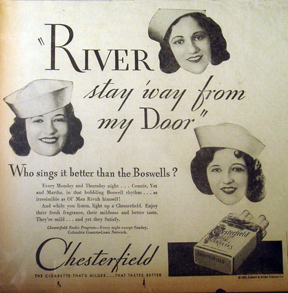
They premiere on the Chesterfield Hour in March. The Boswell’s join the line-up and are featured Mondays and Thursdays; Tuesday and Friday Arthur Tracy, “The Street Singer” is featured; Wednesday and Saturday Ruth Etting is the star of the show.
-
March 10, 1932
Connie Boswell, Art Jarrett – New Orleans Part 1, Boswell Sisters, Sid Garry, California Part 1
-
March 16, 1932
Connie Boswell – Washboard Blues
-
March 21, 1932
There’ll Be Some Changes Made, Between the Devil and the Deep Blue Sea
-
March 26, 1932
With Sid Garry and Chick Bullock, California Part 2
-
April 9, 1932
Connie Boswell – Lullabye of the Leaves, My Lips Want Kisses - Boswell Sisters – If It Ain’t Love, Got the South in My Soul.
-
April 13, 1932
With Bing Crosby – Lawd You Made the Night Too Long
-
April 14, 1932
With Fran Frey, Frank Munn, Mills Brothers, Carmen Lombardo, Okay, America Part 2
-
April 19, 1932
With Fran Frey, Frank Munn, Mills Brothers, Carmen Lombardo, Okay, America Part 1
-
Summer 1932
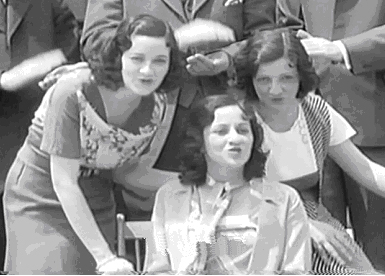
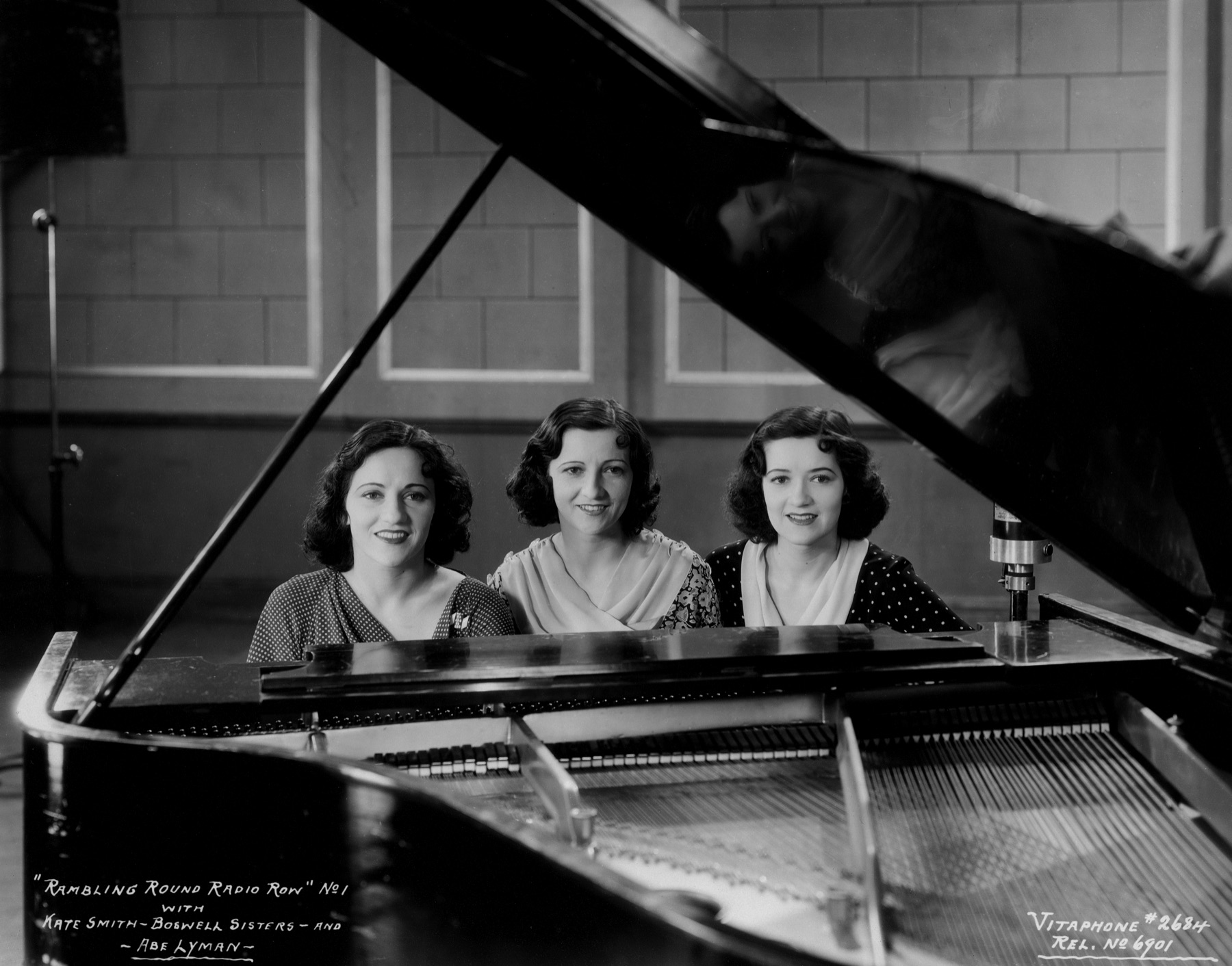
Between radio shows, appearances at theaters and recording a series of great songs that included Connie’s solo Hummin’ to Myself and The Night That Love Was Born (June 16), Martha, Connie and Vet on Doggone I’ve Done It, Hand Me Down My Walkin’ Cane (June 17), and Old Yazoo, the Sisters work in three film appearances, shot in Astoria, Queens. They appear in tableau in a Dave Fleischer cartoon called Sleepy Time Down South, singing the title song as the audience “follows the bouncing ball”. Next they shoot a little number where their rehearsal of Lou’siana Waddle is crashed by band leader Abe Lyman who accuses them of singing off key in the Vitaphone Short “Rambling Round Radio Row #1”. They also shot a portion of their theme song Shout Sister Shout and Crazy People for Paramount Film “Big Broadcast of 1932.” The Crazy People clip is interesting thanks to a slip that Connie seems to make at the end. Using “daffy” where she uses “crazy” in the Dec. 7 1932 recording, her sisters manage to follow her until the final verse when they can’t seem to decide whether to say “go crazy over people like you” or “go crazy over things you go”. But they cover it up so well that apparently no one noticed. Connie sits at the piano with a sort of “oh heck” look on her face. Although released years later (1937) the Boswells also record Heebie Jeebies during this same set. Those fortunate enough to have seen the Boswells perform say that these two shorts are the best examples of how the Sisters appeared onstage. But it must nor have been the best of experiences. Connie, who in her later life is described as “always smiling” has a less than pleased appearance in a photo taken at the time.
-
August 6, 1932
We Just Couldn’t Say Goodbye, Sleep Come and Take Me, Down Among the Sheltering Palms
-
September 10, 1932
Connie Boswell – Say It Isn’t So, Where
-
September 13, 1932
Down on the Delta, Charlie Two-Step, Sentimental Gentleman from Georgia
-
September 27, 1932
Connie Boswell – I’ll Never Have to Dream Again, Me Minus You
-
October 1932
Martha Connie and Vet come home to New Orleans for the first time in almost two years. They are met at the station by the Mayor’s limousine and swept away with a police escort to a special breakfast held in their honor at the Roosevelt Hotel. After being honored by the city fathers they are whisked, sirens blazing to their family home at 3937 Camp Street. Ostensibly home for a rest and prevented from performing without the permission of CBS, the city clamors to hear their hometown sweethearts perform. Harry Leedy arranges with CBS allow them to entertain at the New Orleans Athletic Club where they had made countless appearances in their youth. They played to a packed house with ringing ovations and returned to New York more inspired than ever.
-
Winter 1932
Their radio career flourished, they began touring and cut some classic Boswellian sides with It Don’t Mean a Thing, Lou’siana Hayride and Minnie the Moocher’s Wedding Day (Nov. 22, 1932), Crazy People and Mood Indigo (Dec. 7, 1932). On Mood Indigo could be called the truly “low down” example of the Boswell Sisters lowered pitch. Connie plunks a chorus of Mornin’ Blues right in the middle of the song and it works fabulously. They appear at the Capitol Theater and other cinema houses during January 1933 performing live onstage before the main features. This leads to a tour across the Midwest in February and March where they headline on the bill ABOVE Paul Whiteman!
-
January 9, 1933
Connie Boswell – It’s All My Fault, Underneath the Arches
-
Spring 1933
Even while touring the Boswell’s manage to keep their radio schedule going. Hot on the heels of the Busby Berkley hit, the girls record their take on Forty Second Street and Shuffle Off to Buffalo (April 11, 1933). The latter has been virtually deconstructed in pure Boswell style and the former runs through a series of wild tempo changes that range from low-down blues to bouncy ballad. The next day, April 12, 1933, Connie records her not-so-subtle admonishments in You’ll Never Get to Heaven That Way, and song of romance on the rocks in A Little Second Hand Store.

-
Summer 1933
It’s hard to imagine how they did it all when you look at the summer of ’33. In May they are playing the Oriental Theater in Chicago. In early June Connie cuts four solos in two weeks: I Cover the Waterfront, Under a Blanket of Blue, I Couldn’t Tell Them What to Do (6/10) and The River’s Takin’ Care of Me (6/16). Then the trio knocks out four additional songs on the 13th and 15th, including one they wrote themselves called Puttin’ It On (Oh wouldn’t we love to know that back-story.)
-
June 13, 1933
The Gold Diggers’ Song (We’re in the Money), It’s Sunday Down in Caroline
-
June 15, 1933
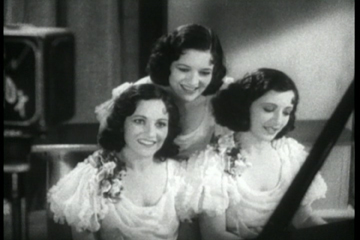
Swannee Mammy They pack it all up at the end of June and make their first trip to the continent in June aboard the Ile de France. Headlines read “Europe Conquered”. Riots nearly break out as the Sisters are mobbed at a Duke Ellington concert. Their show at the Palladium begins with a five minute standing ovation just improves from there. Prince George, future King and father of Elizabeth II, would sneak into the theater night after night right before the Boswell’s performed and then slip away right after they had finished. The trip is interrupted when Connie contracts the mumps. They make an appearance in Holland before they return in August. Sometime that summer they also managed to slip over to Astoria, Queens and shoot a 21 minute Universal feature called “The Boswell Sisters.”
-
August 14, 1933
Connie Boswell – It’s the Talk of the Town, This Time It’s Love
-
August 29, 1933
Connie Boswell – Dinner at Eight, Emperor Jones
-
September 11, 1933
Benny Goodman adds his clarinet to the trio’s Sophisticated Lady and That’s How Rhythm Was Born. This was the first time the great Ellington hit had been recorded as a vocal.
-
November 14, 1933
Back with the Dorsey Brother’s Orchestra the Sisters wax two of their sexiest songs which they later perform in the 1934 film, “Moulin Rouge”. Although not credited (no one is) the swinging celesta rags in Song of Surrender are likely Martha Boswell’s. Coffee in the Mornin’ (and Kisses in the Night) stirred many a man’s sugar at the time and is still hot and sweet today.
-
January 4, 1934
Connie Boswell – I Had to Change the Words, In Other Words We’re Through
-
February 7, 1934
Moulin Rogue premieres and the Sisters join Russ Columbo, their old pal who was booted off their early radio show, onstage at the Rivoli Theater in New York City to sing live for the audience.
-
February 14, 1934
The trio appears with Joe Penner and break all box office records at the Keith’s Memorial Theater in Boston raking in $40,000 worth of business.
-
February 24, 1934
Connie Boswell - Carolina
-
March 23, 1934
is the beginning of another fruitful and frantic period of creativity for the Sisters. They cut I Hate Myself and the lovely You Oughta Be in Pictures. Glen Miller plays trombone with the Dorsey Brothers orchestra in this session. The young Miller would lend his arrangements to a number of Boswell tunes.
-
March 28, 1934
Connie Boswell – Butterfingers, I Knew You When
-
April 6, 1934
Connie Boswell – Over and Over Again
-
April 27, 1934
The Victor Young Orchestra back Connie in The Carioca and The Boulevard of Broken Dreams. In the same session, the Sisters come back with two very beautiful, but very mournful tomes Lonesome Road and Goin’ Home.
-
May 23, 1934
The Sisters cut the rollicking Alexander’s Ragtime Band and the classic Darktown Strutter’s Ball which was only released in Australia. Even today, the tempo changes in Darktown that range from blues, to two-step to rumba make this a classic example of genius the Sisters had to completely recast a song.
-
June 19, 1934
Connie Boswell – Little Man You’ve Had a Busy Day, All I Do Is Dream of You
-
June 21, 1934
Two very interesting songs are recorded. Don’t Let Your Love Go Wrong starts out with a rumba beat and shakes along to the verse where it changes to a foxtrot then seamlessly goes back to the maraca infused rumba . Their switch to a slow tango on the bridge is startling but flawless. Tempo changes weren’t new but the latin beat had just entered their lexicon. Why Don’t You Practice What You Preach is another song admonishing a man to be true. There is a great example of harmonic gulling as Connie and Vet back up a brief solo by Martha with vocal banjo-like sounds. The following week they go Galveston, Texas for a four-week engagement.
-
July 3, 1934
Vet Boswell secretly marries South American oil explorer/journalist John Paul Jones in Houston, Texas. The information isn’t made public until September of 1935.
-
September 15, 1934
The Boswell Sisters become the regular guest of Bing Crosby on the Woodbury Hour. Back in Hollywood they make “Transatlantic Merry-Go-Round” with Jack Benny, Nancy Carroll and Gene Raymond. The Sisters are featured on two songs in the film. In the first, they are in a faux boat in faux waves with little captains’ hats on singing Rock and Roll. In the second they stand and sway for a few moments to the strains of If I Had a Million Dollars. They cut these numbers for record along with Connie’s “Lost in a Fog” and “Isn’t It a Shame” on October 4, 1934.
-
August 21, 1934
Connie Boswell – Say It, A New Moon Over My Shoulder
-
October 4, 1934
Connie Boswell – Lost in a Fog, Isn’t It a Shame
-
December 10, 1934
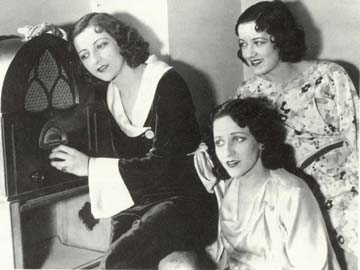
THE BIG ONE!!! Although the girls had recorded a lot of hits, the number one spot had remained elusive. They recorded The Object of My Affection with the Jimmy Grier Orchestra in Los Angeles along with It’s Written All Over Your Face. Object would be the record that climbed to the top. And, as they come to a false stop around midway through the song, the bandleader comes on and says, “Mighty fine, BOZZIES. Fine enough for one more chorus.” Oh yeah!
-
December 13, 1934
Boswell Sisters, Dinah – Connie Boswell, With Every Breath I Take, I’m Growing Fonder of You
-
January 15, 1935
Connie Boswell – Blue Moon, Clouds
-
January 1935
It’s back to the Big Apple as they join Rudy Vallee on the Fleischman Hour.
-
May 16, 1935
After a break the Bozzies return to cut the last sides they will make with Brunswick. They begin with Connie’s Seein’ is Believin’, Chasing Shadows and You’re All I Need. On May 21 they cut Way Back Home and Every Little Moment. On May 28 they make their final Brunswick recordings with Connie’s In the Middle of a Kiss and the trio cuts two songs that harken back to their early records with Travelin’ and St. Louis Blues. Jack Kapp absconded from Brunswick with the thoroughbreds of its stable: Bing Crosby, Connie Boswell, The Mills Brothers, the Boswell Sisters and Victor Young and his Orchestra.
-
June 5, 1935
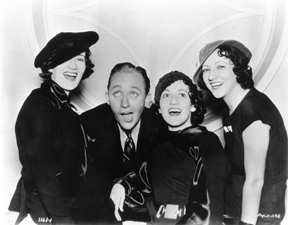
The Decca era begins as the Sisters cut I’ll Never Say Never and Lullabye of Broadway for Dodge Brother’s Corp Vol. 5 in Decca Studios, New York. Jack Kapp is on the way to making Decca an international recording company. Next stop: Europe!
-
July 1935
The Sisters return to Europe for their second grand tour. They record Fare Thee Well, Annabelle and Lullaby of Broadway for the newly formed London Decca. Connie waxes the wonderful Things Might Have Been So Different and I’ll Never Say “Never Again Again in the same session on July 19. There they meet E.N. Holstius, Decca London director who will later arrange for the Sisters to meet WWI Ace Major George Lloyd. (see January 1, 1936)
-
August 26, 1935
Connie jams with the Ramblers Dance Orchestra at Casino Harmdorff in Laren, Holland and cuts I Can’t Give You Anything But Love and Life Is a Song. The Sisters will play Paris before returning to the States in September.
-
October 1935
Connie lays down You Are My Lucky Star and I’ve Got a Feelin’ You’re Foolin’ on October 4, then joins the Sisters for the suave rendering of Top Hat and Cheek to Cheek on October 8. On October 30th Connie joins Ray Noble and his Orchestra on the Coca Cola Show.
-
November or December 1935
Reporter Hilda Cole asks Connie why she is performing without her sisters on radio. Connie’s answer has Vet taking care of her ailing husband who may be shipped to South America when he recovers. Martha has gone home to New Orleans to consider whether to marry a man from New York. All plans are on hold for the trio until they decide what they are going to do. This is the first time since Vet’s marriage is announced September that the public hears of major choices that may change the course of the trio’s career.
-
December 1935
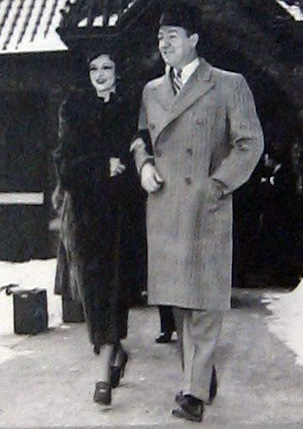
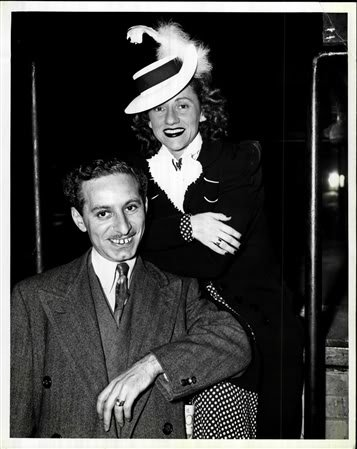
Martha becomes engaged to George Lloyd and the couple plans a New Years’ Day wedding.
-
December 14, 1935
Connie marries manager Harry Leedy in a very quiet ceremony in Peekskill, New York. The next day Harry enters the hospital for a kidney operation. While he is still recovering in the hospital Connie records Moon Over Miami and With all My Heart on December 23.
-
January 1, 1936
Martha weds George Lloyd at St. Stephen’s Church in New York City. Connie is the bridesmaid and Vet is in attendance. The couple will settle at Lloyd-Boswell farm in Peekskill, NY.
-
January 6, 1936
Three married ladies get together to record I’m Gonna Sit Right Down and Write Myself a Letter and the playful The Music Goes Round and Around the week after Martha takes her vows. They make several performances during January for Goodrich Silvertown Time promoting their recent recordings.
-
February 12, 1936
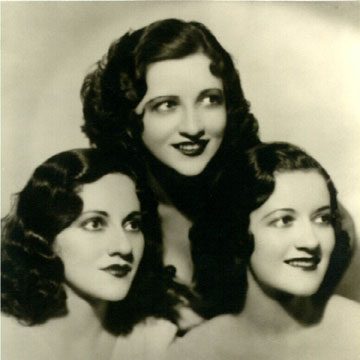
The Boswell Sisters make their final recording together. The Irving Berlin lyrics seem prophetic. The first number features Connie, who hereafter will be on her own, carrying the lead in Let Yourself Go. On the second number the Sisters harmonize throughout the song, a fitting way to declare their new lives with I’m Putting All My Eggs in One Basket. Vet is pregnant at the time of the recording.
-
February 1936 through 1975
Connie Boswell continues on as a solo artist and hits #1 several more times. Her remarkable solo career will be detailed by Bozzies.com in a future rendering.
-
August 25, 1936
Vet Boswell Jones is born in Toronto, Canada.
-
1942
Connie changes the spelling of her name to Connee
-
September 1, 1944
AC Boswell dies in New Orleans.
-
July 7, 1947
Meldania Foore Boswell passes away in Peekskill, New York
-
July 15, 1955
George Lloyd dies in Peekskill, New York.
-
August 30, 1955
Vet and Martha go to see Connee at Jimmy Fazios Supper Club in Milwaukee. Connee persuades her sisters to join her onstage. After a couple of false starts they perform the song they would also start a show with for good luck: Heebie Jeebies. It was their last public appearance.
-
February 11, 1958
John Paul Jones dies in New York.
-
July 2, 1958
Martha Boswell Lloyd passes away after a long illness in Peekskill, New York.
-
January 1, 1975
Harry Leedy dies in New York City.
-
October 12, 1976
Connie Boswell succumbs to cancer in New York City.
-
November 12, 1988
Helvetia Boswell Jones passes away in Peekskill, New York.