Connee Boswell
We had loads of fun with our swinging trio. We were billed one time as musicians and in small print it said, “They also sing”. — Connee Boswell
- Born
- Kansas City, MO, December 3, 1907
- Died
- New York City, October 12, 1976
- Hair
- Black-Brown
- Eyes
- Dark Brown
- Complexion
- Fair
- Height
- 4′ 11″
- Marriage
- Harry Leedy 1935
- Children
- No children but lots of dogs
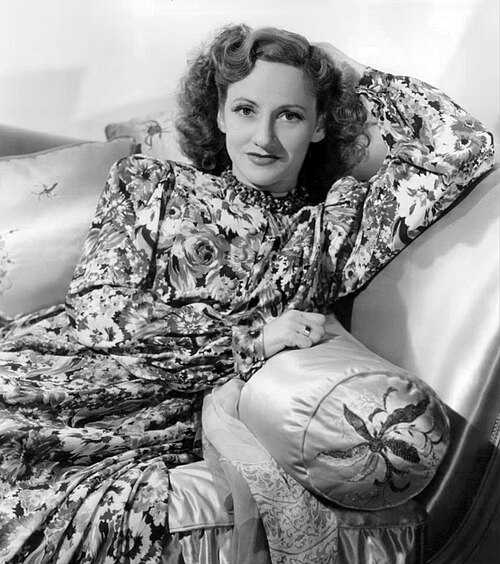
Connie Boswell aka Connee Boswell aka CBOZ
The Boz whose voice could make us lie on the levy, turn black as coal, and our hearts won’t be heavy ’cause we got CBoz in our soul – Oh Lord!
Music
CBoz is music. She fits the metaphor completely. After a bout of polio left her legs partially paralyzed her mother used music as therapy. Giving CBoz a half-sized cello (an instrument she could play seated) she began lessons at age 4. Her talents came to the fore quickly and she soon performed with MBoz on the piano, at the Philharmonic as a featured artist and as a soloist in local programs including the passion play Veronica’s Veil staged at the French Opera House.
Like her sisters, CBoz studied music with Professor Otto Finck and became proficient on the piano at an early age. But it was New Orleans. It was the beginning of the jazz age. And the Bach fugues soon gave way to ragtime and CBoz learned to play the saxophone (which she played in a “barrelhouse style”). But neither she nor her sisters ever took voice lessons. They listened to their parents sing barbershop-style with their aunt and uncle, and began harmonizing along the way.
CBoz recalled her greatest musical influences were Enrico Caruso (she marveled at his breathing and the way it allowed him to hold notes) and Mamie Smith, an African American blues singer. A lot of Mamie and a little bit of Bessie Smith can he heard in CBoz’s first recorded solo, Cryin’ Blues. How wonderfully strange it must have been in 1925 to see this tiny, young, middle class white girl belting and growling through a song of unrequited love. But it became a hit record in the south and paved the way for a great singing career.
As a soloist, CBoz was one of the first to truly appreciate what a microphone could do for a singer. Although capable of projecting her voice to be heard unmiked into the rafters of the largest auditorium, she sang soft and low into the microphone, creating an intimacy that singers would imitate forever after. Unlike most of her contemporaries, she sang in a style closer to her speaking voice the than falsetto favored by European singers. She borrowed liberally from African-American, Latin, jazz and folk idioms and rolled it up into a style that generations of musicians would follow. Her pitch was low and range not wide, but the beauty of her voice, the preciseness of her diction, and flawless phrasing set the standard for popular singing. Irving Berlin preferred her interpretations of his songs above all others and Ella Fitzgerald has always credited her with being the one person who influenced her. Although her style changed over time, and years in smoky nightclubs quickened her vibrato and made her voice huskier, she remained one of the greatest voices in America until the end.
CBoz is generally credited with being the primary arranger of the Boswell Sister’s music. While there is no doubt that CBoz wrote the charts, the Sisters worked out the harmonies as a unit. She told a reporter that she and her sisters would work out an arrangement by having Martha play the music through once as it was written. Then they would begin working on the harmonies at the end of the song and work their way to the beginning.
She also provided a great musical foil for Bing Crosby, and their friendly, intimate banter helped them launch a series of hits in the 30s and 40s.
Another trend born of the mind of CBoz was swinging the classics. She took the English lyrics to Von Flotow’s “M’appari tutt’amor” and turned it into the jazz classic, Martha. She later gave Ah, Sweet Mystery of Life a bounce.
There were also several songs written by CBoz and under her nom de plume Diana Foore. She performed most of them, including Never Had A Lesson in My Life, Lummir Alla Zingen, Main Street on Saturday Night, You Ain’t Got Nothin’, and I Don’t Mind.
Active on stage and radio since 1922, Connie would record, make movies, appear on Broadway and tour across the globe for the next 40 years. She even starred in the TV series Pete Kelly’s Blues in 1959. When you add the Boswell Sisters and CBoz’s recordings together they cut over 300 sides and sold over 75 million records.
Personality
CBoz has been described as tiny, intense and brilliant. She loved to talk. She told an interviewer that sometimes when she was on the road she’d be asked to make an appearance at a TV or radio station. But then they might tell her they didn’t have a script and needed 30 minutes worth of interview. She laughed and said for her that was as easy as falling off a log.
Her sister Vet described her as “silly.” She loved to play pranks and the trio was known to terrorize their neighbors with practical jokes. She also loved sports and could often be found out for a football or baseball game.
Songwriter Jack Lawrence described CBoz as “Always smiling.” Kay Starr recalled her compassion and her willingness to give her time to help those whose handicaps had left them despondent.
She loved to exercise, ride her bike and became very physically fit. She could party with the best of them and could hold her own with Mae West or Dean Martin. She was also a dedicated Democrat and loved to talk politics.
The Solo Years
Connee Boswell — Solo Career Timeline
-
March 5, 1936
Connee Boswell Decca Connee Boswell and her Swing Band wax two sides for Decca in NYC: “The Panic Is On,” followed by “Mama Don’t Allow It.” This was the only time that a recording would be labeled as being “her Swing Band.”
-
1936
Connee Boswell is a featured vocalist on CBS/WABC’s “Coca Cola Show.” She is accompanied by English bandleader Ray Noble and His Orchestra with a band that future famous bandleader Glenn Miller helped organize for him in the US.
-
April 13, 1936
Connee makes the first of many recordings with Bob Crosby & His Bobcats for Decca records when she records the lovely ballad, “You Started Me Dreaming,” which was backed with “Mommy” on the 78 release. Crosby’s band included Matty Matlock, Gil Rodin, Eddie Miller, Bob Haggart, Ray Bauduc as well as others. Other sides she would record with Crosby’s Bobcats would include “On The Beach At Bali-Bali,” “Swing Me A Lullaby,” “I Met My Waterloo,” and “You Can Call It Swing,” recorded on June 9, 1936.
-
August 22, 1936
Vet Boswell Jones Baby Picture Vet Boswell Jones is born in Toronto, Canada. Connee and the whole family take off for Canada and are there when “another small voice” is added to the Boswell Family.
-
July, 1936- March, 1937
Connee guests on a number of radio programs, specifically “The California Hour” broadcast out of Los Angeles, CA.
-
February 15, 1937
Connee records several sides with Ben Pollack and His Orchestra. These included: “When the Poppies Bloom Again,” “Serenade In The Night,” “Where Are You,” and “Trust in Me.”
-
Summer, 1937
Connee Boswell Hollywood Connee travels to Hollywood, where she has a featured spot in the movie, “Artists and Models.” She is filmed performing “Whispers in the Dark,” while Andre Kostelanetz and His Orchestra plays. The song would be nominated for an Academy Award in 1938 for the best song, losing out to “Sweet Leilani,” which was featured in “Waikiki Wedding.”
-
August 23, 26 and 31, 1937
Connee and Ben Pollack Orchestra return to the studios at Decca in Los Angeles and record six more sides, including the commercially released version of her “Whispers in the Dark.” This song would later become the theme song that millions would hear when they tuned into “The Connee Boswell Show,” in the 1940’s.
-
Sept 25, 1937
Connee Boswell Decca Connee and Bing Crosby pair up in Decca’s Los Angeles studio and make the first of their many recordings together. “Basin Street Blues,” is followed by “Bob White (Whatcha Gonna Swing Tonight?).” John Scott Trotter’s (who is probably best known for his very long affiliation with Crosby) Orchestra accompanies. “Bob White” hits #1 on the music charts and is a smash hit. Boswell and Crosby had a relaxed, playful banter that was rarely matched and this is obvious in listening to recordings that feature the pair.
-
October 21, 1937
Connee is a guest on Bing Crosby’s “Kraft Music Hall” program, based out of Los Angeles. Over the next fifteen years, Connee would be featured on the show many times.
-
November 13, 1937
Connee Boswell Decca Back in the Decca Studios again, Connee waxes what is arguably her most successful solo side, “Martha.” Connee had loved listening to Caruso when she was growing up and undoubtably, had been exposed to his recording of Flowtov’s “M’appari, Tutto Amor” from “Marta.” A very brief, sedate classically-influenced passage is interrupted by a trumpet chorus that lets you know right away that this ain’t no opera! Connee, along with Bob Crosby’s Orchestra, swing like madness has set in. As if that wasn’t enough, they back this with a recording of the traditional “Home on the Range,” which also swings like crazy. Jack Kapp, Decca’s head producer, did not want to release the recording for fear that both Decca and Boswell would be panned by the critics for having jazzed up an operatic recording. In true Boswell form, Connee told Kapp that if they were panned, she would take out a full page ad in Variety magazine, three weeks running if they would let her, and take full responsibility for the recording. As it turned out, “Martha” was a sensation and Connee took credit for having started a whole trend of “swinging the classics.”
-
1937
Connee Boswell Playing Flute Connee is featured in the MGM 2-reel short subject, “Sunday Night at the Trocadero.” She sings “I Can’t Give You Anything But Love,” and later, sings “There’s Always A Happy ending,” which introduces a young singing group, the Brian Sisters, who have modeled themselves on the Boswell Sisters.
-
1937
Connee performs in the Columbia Pictures film “It’s All Yours,” which stars Madeleine Carroll and Francis Lederer. A print of the film was found at the Library of Congress, and “It’s All Yours” is available on DVD from vintagefilmbuff.com.
-
January 26, 1938
Accompanied by Victor Young and His Orchestra, Bing Crosby and Connee record “Alexander’s Ragtime Band,” and a medley that has “Home on the Range/True Confession.” Eddie Cantor introduces the first side, letting the listener know that the proceeds of the record will benefit the Juvenile Infantile Paralysis Foundation. The record, which is released around the same time as the 20th Century Fox picture of the same name, is a smash hit and is the Boswell/Crosby pairing’s second #1 hit.
-
February 24, 1938- Feb 22, 1940
Connee Boswell Decca CBoz is featured on the Maxwell House Coffee’s “Good News of 1939” radio program, which is hosted by Robert Taylor (1938), Robert Young (1939) and Edward Arnold (1940).
-
April 9, 1938-June 15, 1938
Connee Boswell Maxwell House Connee is back in Decca’s studios again and records with Harry Sosnick and Ben Pollack on more sides, which include her recording of Irving Berlin’s “(You Forgot to) Remember,” “All Alone,” and a lovely ballad that Connee co-wrote, “I’m Away From It All”, under the name of Diane Foore.
-
1938-1939
Connee will guest on many radio programs, including “This is New York,” “Time to Shine,” “A Tribute to Irving Berlin,” and the “Camel Caravan.”
-
April 25, 1939
Connee, who has heard the instrumental versions of “Sunrise Serenade,” asks her friend Jack Lawrence to pen lyrics. She hits the studios and records this song, which becomes a minor hit recording for her.
-
June 22, 1939
Connee Boswell Decca Bing and Connee are back in the studios at Decca and record “Start the Day Right,” and “An Apple for the Teacher.” They hit the studio again on December 15, 1939 to wax “Between 18th and 19th on Chestnut Street.
-
January 10, 1939
Connee records several sides with the Woody Herman Orchestra, including “Deep in a Dream.”